

Possible Risks of Hair Transplantation
Hair transplantation is considered one of the most effective and permanent
solutions for people experiencing hair loss today. Thanks to advancing
medical techniques, hair transplant procedures have become quite safe.
However, as with any medical procedure, there are also
possible risks of hair transplantation.
Hair transplant procedures are generally considered safe when performed
by experienced specialists. Nevertheless, some temporary side effects
or complications may occur after the procedure. For this reason, it is
important to be aware of the possible risks before undergoing a hair transplant.
Temporary Side Effects After Hair Transplantation
Some temporary side effects may occur after a hair transplant procedure.
These effects usually resolve on their own within a short time and do not
cause serious problems. The most common side effects include:
- Mild redness and sensitivity
- Scabbing
- Swelling (edema)
- Itching
- Temporary numbness
These effects usually appear within the first few days after the procedure
and decrease quickly with proper care.
Shock Hair Loss
One of the most common conditions after a hair transplant is known as
shock hair loss. In this situation, the transplanted
hair strands may fall out within a few weeks.
Although shock loss may appear concerning for many people, it is actually
a normal part of the hair transplant process. This is because the part
that falls out is the hair shaft; the hair root remains under the skin.
New hair growth usually begins after 3–4 months.
Risk of Infection
If the hair transplant procedure is not performed in a sterile environment,
there may be a risk of infection. However, thanks to the sterilization
procedures used in modern clinics, this risk is quite low.
To reduce the risk of infection, it is very important to follow the doctor’s
instructions, take prescribed medications, and follow post-transplant care guidelines.
Scarring in the Donor Area
During hair transplantation, hair follicles are usually taken from the
back of the head (the donor area). With modern techniques such as FUE,
the risk of visible scarring is very low. However, in some cases,
small scars may appear in the donor area.
These scars usually become invisible as the hair grows longer.
When the procedure is performed by an experienced team,
this risk is minimized.
Risk of Unnatural Results
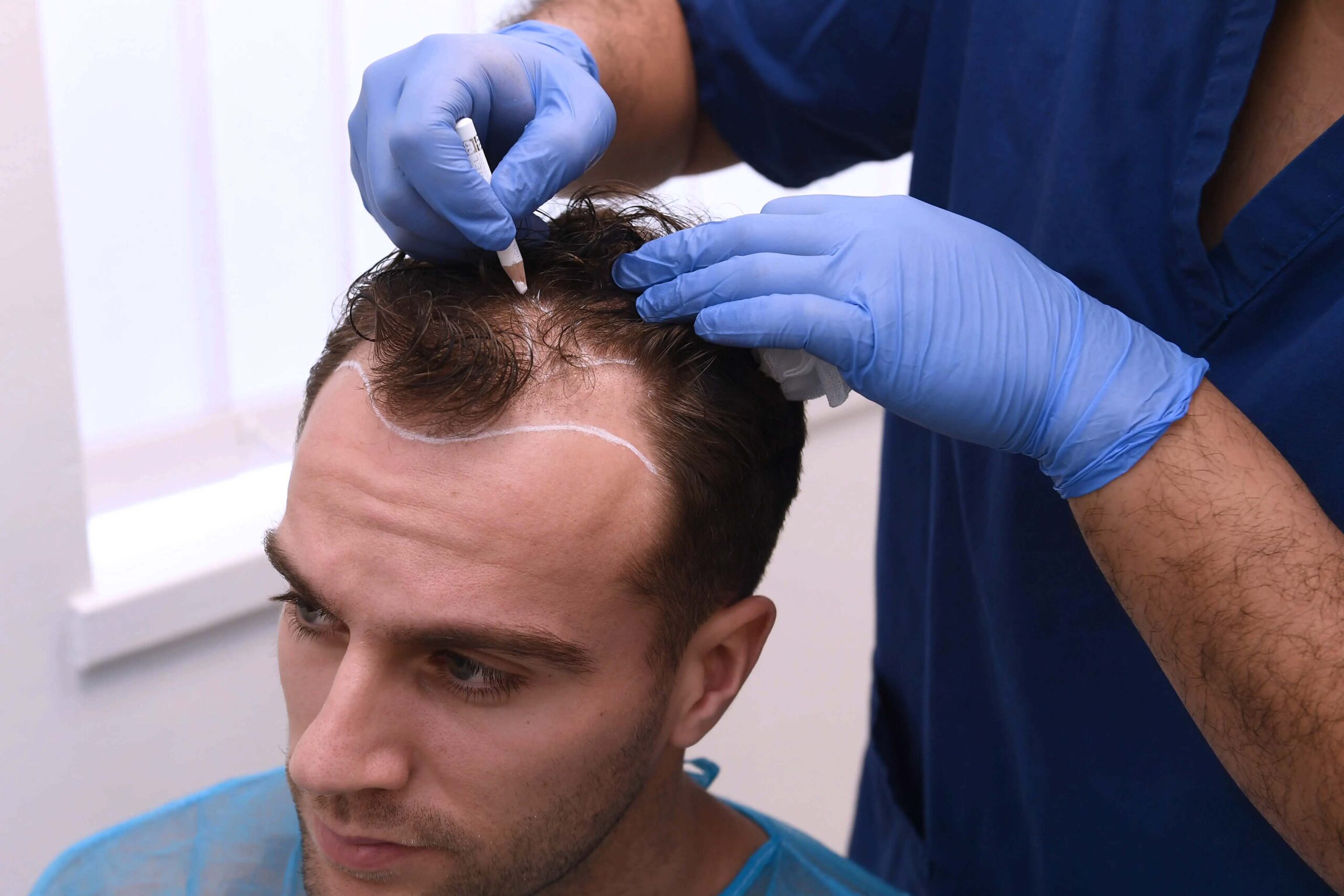
If hair transplant planning is not done properly, an unnatural
hairline may appear. For this reason, it is extremely important
that the procedure is performed by experienced specialists.
By placing hair follicles at the correct angle and direction,
it is possible to achieve a natural appearance after the transplant.
Recommendations to Reduce Hair Transplant Risks
To reduce the possible risks of hair transplantation,
it is important to consider the following recommendations:
- Choose an experienced and reputable clinic
- Follow the doctor’s post-procedure care instructions
- Protect the scalp from impacts during the first few days
- Limit smoking and alcohol consumption
- Do not skip follow-up appointments
What Should Be Considered During the Recovery Process After Hair Transplantation?
The recovery process after hair transplantation is extremely important
for the success of the procedure. After the transplant, the scalp
should be protected and the care instructions provided by the doctor
should be carefully followed. In the first few days, sensitivity,
redness, and small scabs may appear in the transplanted area.
During the first week, care should be taken when touching the scalp,
and the transplanted area should be protected from impacts.
Additionally, heavy sports activities, excessive sweating,
and hot environments such as saunas and Turkish baths
should be avoided for a period of time.
Using special shampoos and care products recommended by the doctor
also helps the transplanted hair follicles attach properly.
With proper care, the recovery process after hair transplantation
usually progresses smoothly.
Is It Possible to Reduce Risks Before Hair Transplantation?
The most important way to reduce the possible risks of hair transplantation
is to have the procedure performed by an experienced medical team.
During the planning stage, the structure of the hair,
the degree of hair loss, and the capacity of the donor area
should be carefully evaluated.
Proper planning not only helps achieve a natural appearance
but also minimizes potential complications.
In addition, a person’s overall health condition should be evaluated
before the procedure. Some chronic diseases or medications
may affect the hair transplant process. Therefore,
a detailed medical consultation with the doctor before the procedure
is very important.
In conclusion, when hair transplantation is performed with proper planning,
in a sterile environment, and by an experienced team,
it is considered a safe procedure. People considering hair transplantation
should obtain accurate information about the process and choose
a reputable medical center to significantly reduce potential risks.
More Information
For more detailed information about hair transplantation,
you can visit our
hair transplant page
.
For scientific information about hair loss,
you can review the
American Academy of Dermatology
resource.